Transforming Legal Operations
XTND is a billing and collections platform for modern law firms.
Built Inside a Law Firm
Most legal billing software is built by engineers who’ve never had to explain a write-down to a client. XTND started from the other end. Our co-founders spent more than a decade rebuilding billing operations from inside a law firm, working alongside Lydecker LLP.
The platform ran in production at Lydecker, a 150-attorney national insurance defense firm with more than 200 timekeepers across eight states, for a decade before we offered it to anyone else. Every workflow in it exists because a billing team needed it on a real deadline, against real client guidelines.
Over that decade the firm grew: more attorneys, more matters, more invoices every month. The billing team didn’t grow with it, because the work that used to take people had been automated out of their week.
In late 2025 we spun XTND out as its own company, at Clio’s encouragement, to bring the same operations to firms with no realistic way to build it themselves.
Several mid-size insurance defense and outside general counsel firms now run on it, each with their own carriers, guidelines and billing habits.
10+
Years in production before we opened it to other firms
100,000+
Invoices processed through the platform
1,000+
Timekeepers and billing staff have used it across the decade
11
States it has run in, alongside international users
50%
Less attorney time spent reviewing invoices
2x
Invoice throughput, with one fewer billing role
Operators First, Founders Second
The people who built XTND have run the billing operations it replaces, for the firms that depend on them. They have worked together for over a decade.
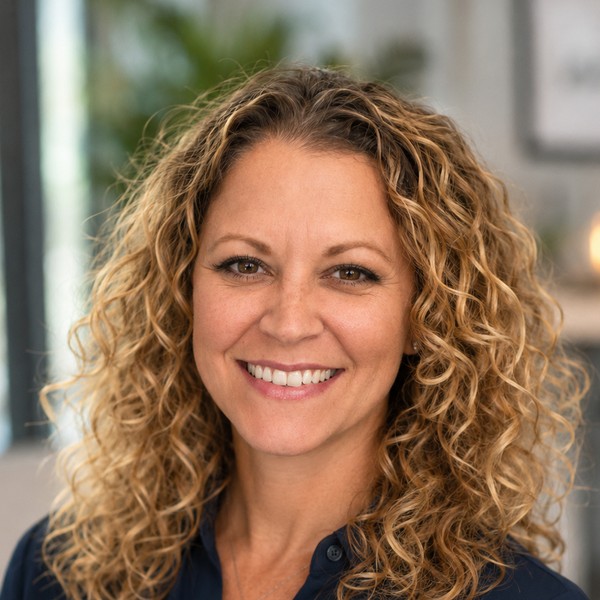
Kirsti Elliott on LinkedIn (opens in a new tab)
Co-Founder & CEO
Kirsti spent nearly two decades building and scaling technology businesses, specializing in process re-engineering and change management. She then brought that expertise to national insurance defense firms, spending the next decade transforming the billing and collections workflows XTND now automates — from carrier guidelines and write-downs to trust shortfalls. Her consulting firm, Coral Edge, was named Clio’s 2024 New Partner of the Year.

Ben Elliott on LinkedIn (opens in a new tab)
Co-Founder & CTPO
Ben architected XTND and ran it in production for a decade inside a 150-attorney firm operating across eight states, bringing it to market proven rather than prototyped. For the past five years, he has led the development of XTND’s AI and machine learning capabilities, building on two decades of experience with high-transaction systems for telecommunications companies and national retailers. He is also a serial entrepreneur, having founded several companies before XTND.

John Dantzler on LinkedIn (opens in a new tab)
Co-Founder & COO
John leads XTND’s Clio partnership and the law firm relationships driving its pipeline, taking firms from first conversation through signed implementation. As a founding partner, he also shapes XTND’s growth strategy. A PMP and Certified Scrum Product Owner, he brings the delivery discipline to keep implementations on scope and moving forward.
Working Alongside Clio
XTND integrates directly with Clio and QuickBooks Online. We work alongside Clio’s team to bring the back office to firms already running on Clio: billing, trust, collections and vendor costs. Your practice management stays where it is. XTND handles what happens after the time is entered.
Our Purpose
Law firms invoice 88% of the billable work they capture, then collect 93% of what they invoice — so roughly 18% of the work already performed never becomes cash. Not because the work lacks demand, but because the back office that decides whether a firm gets paid is still manual, fragmented, and error-prone.
Client guidelines differ from matter to matter, budgets cap what will be paid regardless of the work performed, trust accounts have to be replenished before anyone notices they are short, and a rejected line item is revenue the firm will never see again.
None of that is really a billing problem. It is an operations problem that happens to show up in the bank balance.
Clio Legal Trends, 2025
So that is what we build for: the visibility to see where the money stops, and the automation to keep it moving. Not more billable hours. The ones your firm has already worked.